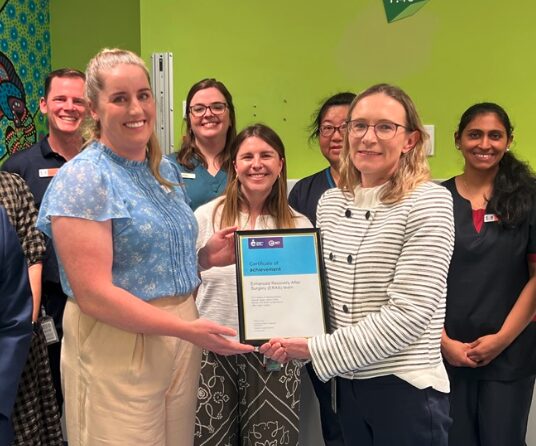
Patients at Canberra Hospital are recovering faster and spending less time in hospital thanks to the Enhanced Recovery After Surgery (ERAS) program, which is marking five years of improved outcomes after major surgery.
The ERAS program helps patients prepare for surgery and take an active role in their recovery, supporting safer care, fewer complications and an earlier return home when it is right to do so.
ERAS supports patients undergoing seven types of major surgery, including elective caesarean sections, hysterectomies, colorectal surgery, lung resections, breast reconstructions, major head and neck surgery, and major vascular surgery.
A key focus of the program is helping patients feel informed and prepared before they come to hospital.
ERAS Clinical Lead, Dr Andrew Deacon said patients attend a pre‑admission clinic before surgery to understand what to expect and how they can support their own recovery.
“Before surgery, patients meet with our physiotherapists, dietitians, nurses and speech pathologists. They receive a personalised plan that explains what they can do before and after surgery to help their recovery and get back on their feet sooner,” he said.
Since the ERAS program was introduced, outcomes for ERAS patients have improved significantly. Admissions to the Intensive Care Unit have reduced by 46%, and medical complications have reduced by 50%.
“The program is delivering impressive results across all specialties. We are seeing fewer readmissions and strong improvements in how quickly patients recover after surgery,” said Dr Deacon.
For patients undergoing vascular surgery, the median length of stay has reduced by one day, and complications have fallen by 40%.
For colorectal surgery patients, the average hospital stay has reduced from 10 days to eight days, and longer stays of more than 14 days have reduced by 36%.
The ERAS program uses a coordinated, patient‑centred approach to care. Patients are supported to take an active role in their recovery through tailored pre‑surgery education, early movement after surgery and setting daily post‑operative recovery goals with their care team.
Patients identified as higher risk can also access additional supports, including prehabilitation exercise classes and free nicotine replacement therapy, to help improve their recovery and overall health outcomes.