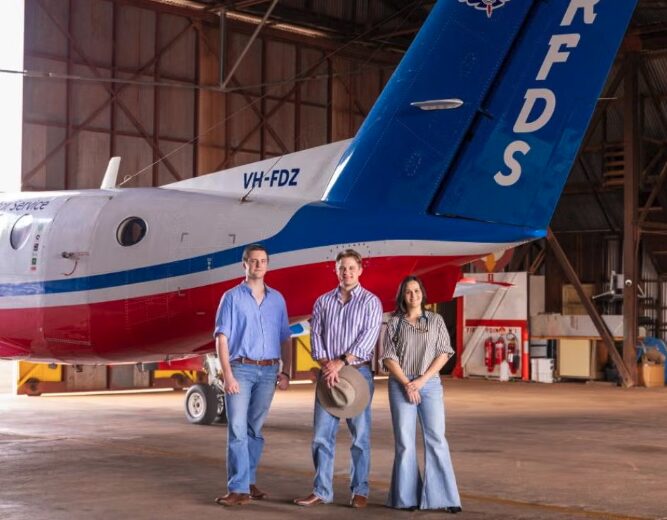
The University of Queensland has confirmed will offer 10 additional places for domestic students to train as doctors in regional and rural communities, as part of a Federal Government initiative to strengthen the GP and rural medical workforce.
The extra Commonwealth Supported Places (CSPs) at UQ are among 50 announced nationally, to be available from 2028.
Dean of UQ’s Medical School, Professor Craig Munns said the investment would support students to undertake medical training in the Darling Downs and South West, and Wide Bay-Burnett regions, giving them the competence and confidence to pursue GP and rural medical careers.
“We welcome this opportunity to build on our efforts to boost the medical workforce across rural and regional Queensland, through our partnership with local communities and health services,” Professor Munns said.
“The UQ Medical School’s presence across regional and rural Queensland has grown significantly, from 31 students when it’s Rural Clinical School was established in 2002 to more than 384 today.”
Students can now complete their entire medical education journey from their undergraduate degree to UQ’s Doctor of Medicine and clinical training, without leaving the Wide Bay, Central Queensland, Darling Downs and South West regions.
UQ’s Medical School also offers first-year medical students a glimpse into rural health and medicine through its annual Rural Immersion program.
This month, 136 medical students visited 12 communities across rural Queensland, with Charleville and Monto added to the program for the first time.
Professor Bruce Chater, head of the Medical School’s Mayne Academy of Rural and Remote Medicine, said the Rural Immersion program had made a meaningful difference to addressing rural doctor shortages since it began in 2023.
“Exposing our medical students to the career opportunities, communities and rural lifestyle early on is a key factor to encourage students to pursue rural medicine careers,” Professor Chater said.
“This year we sent a cohort of 10 medical students to Charleville for the first time – an iconic rural town home of the longest continuing Royal Flying Doctor Service Base in Australia.”
A study of UQ medical graduates from 2012 to 2021 showed that students who spend two of their four-year Doctor of Medicine in a regional centre and complete a 12-week placement in a small rural town, have a 60 per cent chance of returning to work in rural or regional areas after graduation.
“The same UQ-led research demonstrated medical students who undertook this were more likely to work in smaller rural or remote communities which are often the hardest to recruit to,” Professor Chater said.
“We have learnt that early, repeated and prolonged rural experiences are key to encouraging students to consider rural careers.
“The earlier students engage with rural communities, the more likely they are to build the understanding, relationships and confidence that support a future in rural practice.”
South West Hospital and Health Service Chief Executive Dr Anthony Brown, said the program was an invaluable opportunity to inspire the next generation of rural doctors.
“By connecting students with our communities and health services, we’re helping build the future rural workforce and showcasing opportunities available across our region,” Dr Brown said.