Stronger protections have been recommended for people affected by coercive high-control groups in Victoria, with a Parliamentary committee report also calling for greater awareness and targeted legal reform.
Presented in two volumes, the Legislative Assembly Legal and Social Issues Committee’s Report explores the methods and tactics used by coercive high-control groups to recruit, control and harm people, and shares the experiences of those directly affected, demonstrating the significant and often enduring real‑world impacts of coercion and control.
The Inquiry found that coercive high-control groups are more widespread and less easily identifiable than many people assume, with anyone at risk of being recruited.
“People encountered these groups in everyday settings, through workplaces, universities, friends and family, and community organisations,” said Committee Chair, Ella George.
“The evidence shows that involvement is not a reflection of personal weakness. Many people are drawn in during periods of vulnerability, and some never had a choice at all, having been born or raised within these groups.”
The Committee has made 39 recommendations to the Victorian Government, which include:
- Establishing a lived experience advisory body to inform reforms addressing the impacts of coercive high-control groups;
- Asking the Victorian Law Reform Commission to review legislative options to criminalise group‑based coercion;
- Developing risk indicators of coercive high-control groups and ensuring frontline workers are equipped to recognise and respond to group-based coercion, particularly for professionals working with children;
- Building community awareness about the risks of coercive high-control groups and where people can seek help.
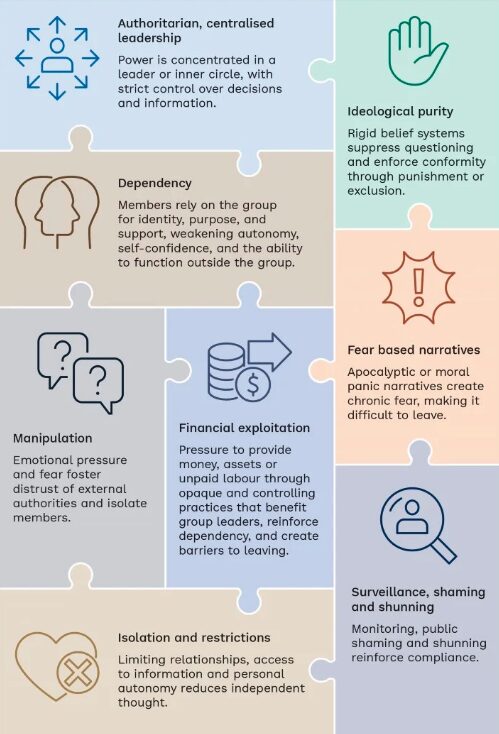
The Inquiry found that recruitment is often gradual and relationship-based, masking the controlling nature of groups until people are deeply involved. Once inside, people described experiences of psychological manipulation, social isolation, and pervasive control over their relationships, beliefs and personal decisions.
The Report highlights the heightened risks faced by children and young people, especially those who are raised within high-control environments and recruited during formative stages of development.
“These groups are defined not by what they believe, but by how they treat people,” Ms George said.
“Any response must remain focused on harmful behaviour – not beliefs – to ensure protections are both effective and respectful of fundamental rights.”
Ms George said the recommendations provide a practical pathway to prevent harm, identify risks earlier and strengthen support for those affected.
“This Report sets out clear and actionable steps the Victorian Government can take to better recognise these harms, increase supports, and strengthen efforts to prevent further harm,” she said.
“The courage of those who shared their deeply personal experiences has been critical in bringing these issues to light and shaping this Report.”
A copy of the final report is available on the Committee’s website: https://www.parliament.vic.gov.au/cofg-reports.