The NSW North Coast has celebrated the restoration and reopening of a major wetland in the heart of Byron Bay as part of a $26 million project to reduce the impact of flooding and keep pollution away from the shire’s celebrated beaches.
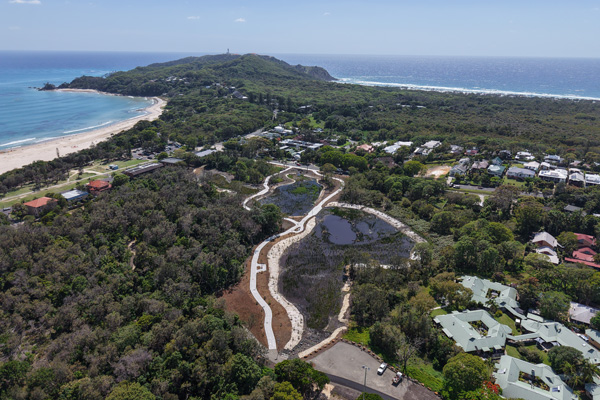
In a dramatic transformation, three large retention ponds are the new centrepiece of the 5.5ha Sandhills Wetlands, attracting native birds, animals, residents and tourists alike.
The reopening of the wetlands yesterday celebrated the return of a habitat which had been destroyed by sand mining in the 1960s.
A network of paths now connects the site to the town centre, Jarjumirr skatepark and up to Walgun Cape Byron Lighthouse, encouraging nature-based recreation for people of all ages and abilities.
“This wetland stands as a powerful example of what we can achieve when we listen, respect and work together,” said NSW Minister for the North Coast, Janelle Saffin.
“Guided by Aboriginal co-design and supported by all three levels of government, we’ve restored a vital ecosystem, created a place for visitors and locals to enjoy, and strengthened our protection against future flooding.
“This is a project that brings our community closer to Country and prepares us for a more resilient future.”
The project is stage one of the overall $26 million Byron Bay Drainage Strategy, which is receiving $11.8m through the Northern Rivers Recovery and Resilience Program (NRRRP).
The NRRRP is a $150 million program delivering 36 flood mitigation and resilience projects across seven local government areas (LGAs) impacted by the 2022 floods, funded by the Albanese Government and administered by the NSW Reconstruction Authority (RA).
“The reopening of the Sandhills Wetlands is a great example of the Albanese and Minns Governments working together to deliver long-term practical flood mitigation infrastructure for communities across Byron Bay,” said Federal Minister for Emergency Management, Kristy McBain.
“By restoring this vital wetland and upgrading the town’s drainage system, we are helping safeguard local homes, businesses and iconic natural assets from the increasing impacts of severe weather.
“This project demonstrates what genuine partnership with local government and Traditional Owners can achieve, creating a more resilient Byron Bay while enhancing public spaces that locals and visitors can enjoy for generations.”
Byron Shire Council, which is delivering the wetlands and drainage improvement works, also received $6 million from NSW Government Infrastructure Betterment Fund Grant and $3 million from the NSW Government Open Spaces Legacy Grant towards the Sandhills Wetlands project.
The Arakwal Corporation, Tweed Byron Local Aboriginal Land Council and NSW Crown Lands also provided guidance in co-designing the project.

“This is an exciting project for Council because it is one of the most significant environmental restoration projects to happen in Byron Bay in recent years,” said Mayor Sarah Ndiaye.
“Already people are telling me there are more wallabies on and around the site and I am really excited to see the birdlife flourish in this amazing community place which, in the last 18 months, has been completely transformed.
“One of the main objectives of this project was to improve water quality especially around Clarkes Beach and this will have long-lasting benefits for the nearby Cape Byron Marine Park and all the fish, turtles and other marine life.”
The Sandhills Wetlands is one part of the overall drainage project, aimed at reducing the impacts and frequency of flooding in Byron Bay. The new wetlands will collect and hold stormwater runoff from surrounding hills, before it’s slowly released towards Belongil Creek.
Work also has started on increasing the capacity of connecting stormwater pipes underneath the CBD, with stormwater concrete culverts, almost double the size of the existing pipes, being installed. Underneath the railway corridor, the largest culverts will be almost seven metres wide to help reduce the current flash-flooding risk to CBD businesses.