South Australia’s State Emergency Service (SES) search and rescue response capability is being boosted with the deployment of nine new remotely-piloted aircraft.
The new drones replace ageing equipment and are part of a $2 million 2025-26 State Budget program to modernise SES aerial reconnaissance, intelligence gathering and hazard assessment capabilities.
“Ensuring front line responders have access to the right equipment can make the difference between life and death in some situations,” said SA Minister for Emergency Services, Rhiannon Pearce.
“This investment in drone technology means our SES volunteers can remotely assess landscapes and situations before they put themselves on the line for our community.
“The Malinauskas Government’s $2 million funding injection also provides for the training of additional pilots including for attaining and their Civil Aviation Safety Authority licencing.”
The SES now operates one of the largest emergency service drone fleets in South Australia.

The drones provide real-time aerial vision, thermal imaging to locate people in low visibility environments and access to hazardous locations without placing first responders at risk.
The new aircraft feature:
- extended flight times through improved battery capacity and rapid charging;
- multiple high-resolution visual cameras and infrared thermal capability;
- integrated spotlights and loudspeakers to improve visibility and communication;
- AI-enabled recognition of people, vehicles, and boats;
- smart mapping and terrain modelling to enhance tracking and situational awareness.
In 2025, SES drones were deployed more than 500 times to support emergency operations, most commonly assisting SAPOL with missing person searches, where time-critical aerial intelligence can save lives.
Six of the new drones will be regionally based in Port Lincoln, Quorn, Ceduna, Port Pirie, Gawler, and Kangaroo Island, with the remaining three to be based in Adelaide.
“Drone technology is rapidly evolving and the demand for their use in our operations continues to increase each year,” said Chief Officer for the State Emergency Service, Kristy Phelps.
“As an agency we rely on volunteers to help protect our communities and help those in need.
“We know not everyone can or wants to go on a truck, but having a capability such as being a drone pilot is a specialist skill that we will need more of in the future.”
The SES says it will continue expanding its aerial search capability in 2026, with a six-month microdrone trial. Ten lightweight microdrones, each weighing less than 250 grams, will be deployed across six regional and four metropolitan SES units, enabling rapid deployment directly from response vehicles. The trial locations include Kimba, Clare, Copper Coast, Western Adelaide, Salisbury, Campbelltown, Noarlunga, Kingston, Berri, and Kapunda.
“Drones are now an integral part of the SES’ search and rescue capability, and their technology has evolved significantly since we began using them in 2018,” said SES Chief Remote Pilot, Brad Flew.
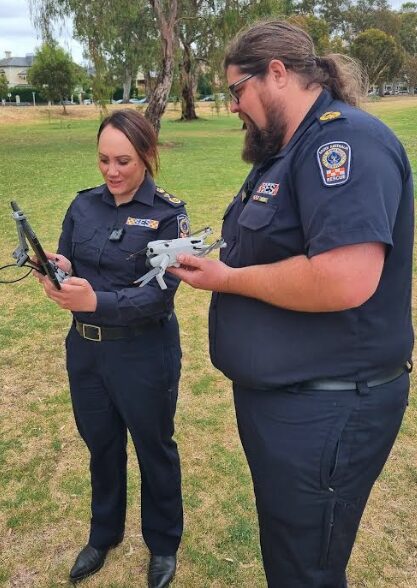
“However, drones often operate in incredibly challenging conditions and as they get older, they become more expensive to repair and their technology becomes outdated.
“These replacement units not only offer improved capabilities in terms of flight times and capturing images, but they also have more safety features to minimise the risk of an accident when flying.”
Training for SES Remote Aircraft Pilots on the microdrones will begin in February, ensuring the technology can be safely and effectively integrated into frontline operations.
Anyone interested in becoming a SES volunteer and becoming involved with the remote pilot aircraft program is encouraged to visit the SES website or call (08) 8130 0350.